
English| EUR
Suggested for you
More currencies
Choose a language
Two South African reserves dominate every shortlist, and the search history of anyone planning a first game drive tends to end at the same question. Reviewers weigh Pilanesberg's proximity to Johannesburg against Kruger's sheer scale, and the honest answer depends less on the parks than on how many nights you have. This page sets out what the reviews actually say, and what they leave out.
Quick answer
For trips of one to two days from Johannesburg, most reviews favour Pilanesberg: it is roughly a two-and-a-half-hour drive, malaria-free, and holds all Big Five species inside a compact volcanic crater. Kruger wins on scale, species diversity and multi-night immersion. Gates open at 05:30 daily, and the 05:30–09:00 window is when reviewers report the densest sightings.
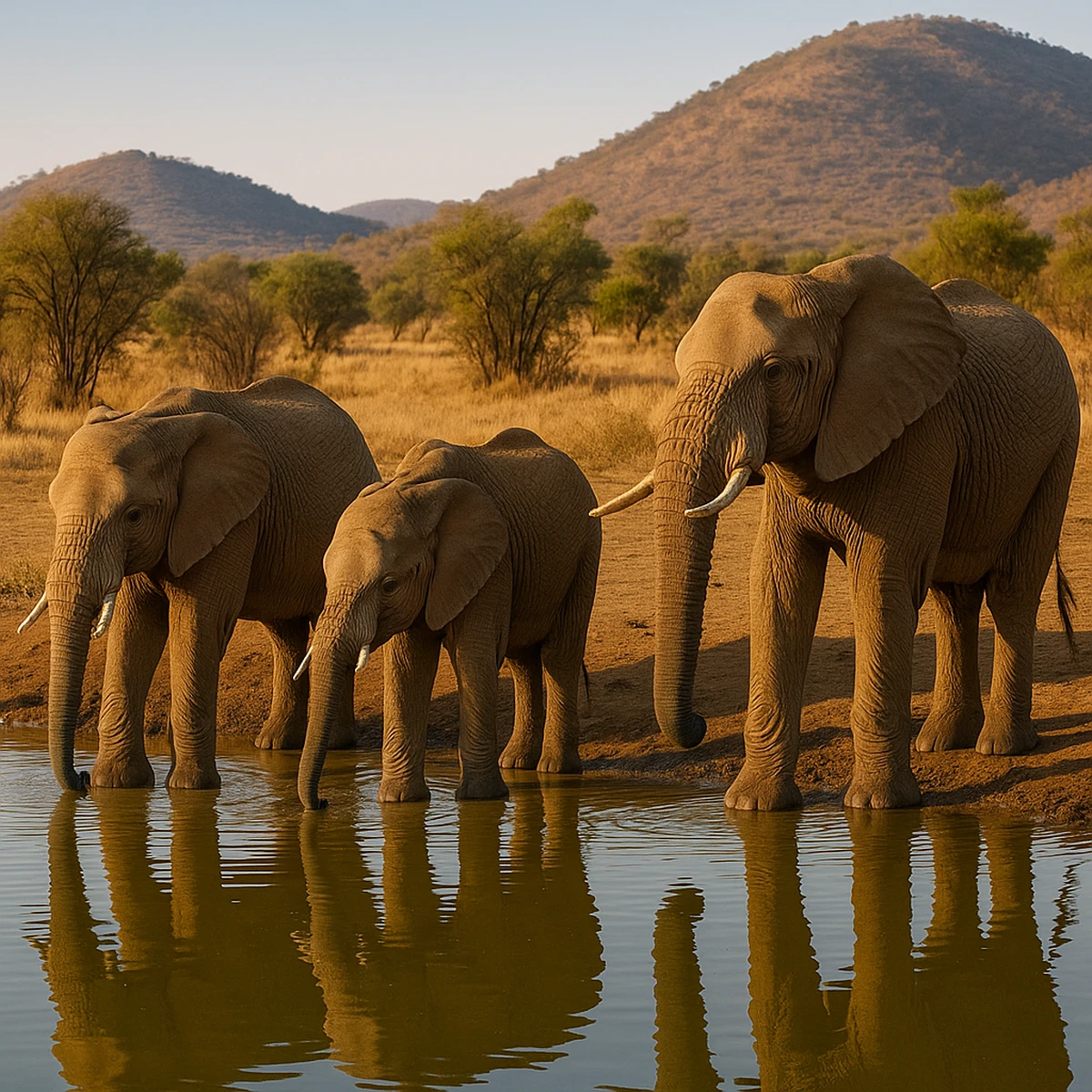
Pilanesberg sits inside the eroded crater of an alkaline volcano that last erupted some 1,200 million years ago, making it one of only three such structures on the planet. That geology explains a great deal about why pilanesberg or kruger for safari reviews so often reach different verdicts. The crater's rim concentrates habitat into roughly 550 square kilometres, so the transition zone between Kalahari and Lowveld vegetation delivers game density that a far larger park cannot match hour for hour. The practical divide reviewers describe is one of time budget rather than quality. Kruger stretches nearly 350 kilometres north to south along the Mozambique border, and visitors who fly to Skukuza or drive the Panorama Route typically commit three nights or more. Pilanesberg, reachable from Johannesburg in about two and a half hours via the N4 and Sun City, absorbs a single day comfortably. Reviewers who tried to compress Kruger into one day almost uniformly report long transfer hours and thin sightings. Those same travellers rate a Pilanesberg game drive highly because the arithmetic works. Malaria is the other recurring theme. Pilanesberg lies well outside the transmission zone, which removes prophylaxis from the planning list entirely — a decisive factor in family reviews and for travellers with young children. Kruger's northern sections require precaution, particularly in the wet summer months. Sightings themselves favour Kruger for wild dog, and for the sheer variety of antelope and raptor species; Pilanesberg counters with reliable white rhino, elephant herds around Mankwe Dam, and open hides such as the one at Ratlhogo where photographers wait out the midday lull. What the reviews rarely mention is that the two parks answer different questions. A Johannesburg city break with one free morning is not the same trip as a dedicated safari holiday, and treating pilanesberg or kruger for safari reviews as a ranking exercise obscures that. Bakubung, Manyane and Bakgatla gates each serve different approaches from the Bojanala Region road network, and the choice of gate shapes the first hour of a drive more than the choice of park shapes the week. Read the reviews for texture, then decide by calendar.
“Reviewers who tried to compress Kruger into one day almost uniformly report long transfer hours and thin sightings.”
Choosing between Pilanesberg and Kruger National Park depends on your available time and preference for wildlife density versus vast wilderness. This comparison highlights the practical differences to assist in your travel planning.
| Pilanesberg National Park Kruger National Park | Near Johannesburg Remote location | Recommended for short trips Recommended for extended stays | |
|---|---|---|---|
| Location | North West Province | Limpopo/Mpumalanga Provinces | — |
| Accessibility from Johannesburg | 3 hours by road | 6 hours by road or flight | — |
| Park Size | 572 square kilometers | 19,485 square kilometers | — |
| Landscape | Volcanic crater basin | Savanna and woodland mosaic | — |
| Wildlife Viewing Style | High density, concentrated | Sprawling, diverse range | — |
| Atmosphere | Compact and accessible | Wild and expansive | — |
Verdict: Select Pilanesberg for time-sensitive travel from Johannesburg, or choose Kruger for a multi-day immersive wilderness experience.
Pilanesberg National Park operates on a consistent schedule throughout the week. The park remains open daily to accommodate visitors arriving for wildlife observation.
Entrance to Pilanesberg National Park is governed by a standard conservation fee structure. These costs are mandatory for all visitors entering the reserve.
Verdict: A foreign adult pays 748 ZAR as a base conservation fee, excluding the additional charge required for vehicle entry.
The best arrival window is 05:30–09:00, as early morning provides optimal lighting and wildlife activity before temperatures rise. Planning your visit around these hours ensures higher visibility of animals moving through the park landscape.
Cool mornings, warm days (15°C–25°C). Vegetation is sparse, making wildlife easier to spot near water sources.
Hot and humid (20°C–32°C). Lush green scenery provides vibrant landscapes, though animals are more dispersed.
—. Early access minimizes vehicle congestion on narrow park roads for a quieter experience.
Verdict: Visit on a weekday between 05:30–09:00 during the dry months of May through September for the most consistent wildlife sightings and manageable weather.
Pilanesberg National Park is located in the Bojanala Region of the North West Province, approximately 150 kilometers northwest of Johannesburg. The most direct approach is by private vehicle, allowing for flexibility when navigating the park gates.
Follow the N4 highway from Johannesburg towards Rustenburg, then take the R510 or R556 toward the park
Private transfer services operate from Johannesburg and O.R. Tambo International Airport
Plan your arrival for the best arrival window of 05:30–09:00 to maximize wildlife activity. Visitors should confirm their specific gate entrance upon arrival at the park address in the Bojanala Region.
Everything you need to know about pilanesberg or kruger for safari reviews
Pilanesberg is often preferred for short trips from Johannesburg due to its proximity, as noted in many a pilanesberg or kruger for safari reviews discussion. It allows for a full wildlife experience without the long transit times required for the larger park.
Most visitors looking at a pilanesberg or kruger for safari reviews guide find that both parks offer excellent opportunities to see the Big Five. Pilanesberg provides a more concentrated viewing experience within a dormant volcanic crater.
When reviewing pilanesberg or kruger for safari reviews, visitors often note that entry fees and travel costs make Pilanesberg a more budget-friendly option for those based in the North West Province. Kruger requires more extensive logistics and longer stays to maximize value.
Pilanesberg is significantly closer to Johannesburg, making it the top choice for travelers with limited time in their itinerary. Accessing Kruger generally requires additional domestic flights or a much longer drive from the city.
The primary distinction in a pilanesberg or kruger for safari reviews analysis is the landscape; Pilanesberg features unique alkaline ring complex geology. Kruger is a massive wilderness area offering a greater diversity of ecosystems and varied animal sightings.
Families often find Pilanesberg more manageable for younger children because the shorter travel time reduces fatigue. Many travelers consulting a pilanesberg or kruger for safari reviews summary prefer the park's compact layout for family-friendly day trips.